
By Dr. Tommy Zakrzewski
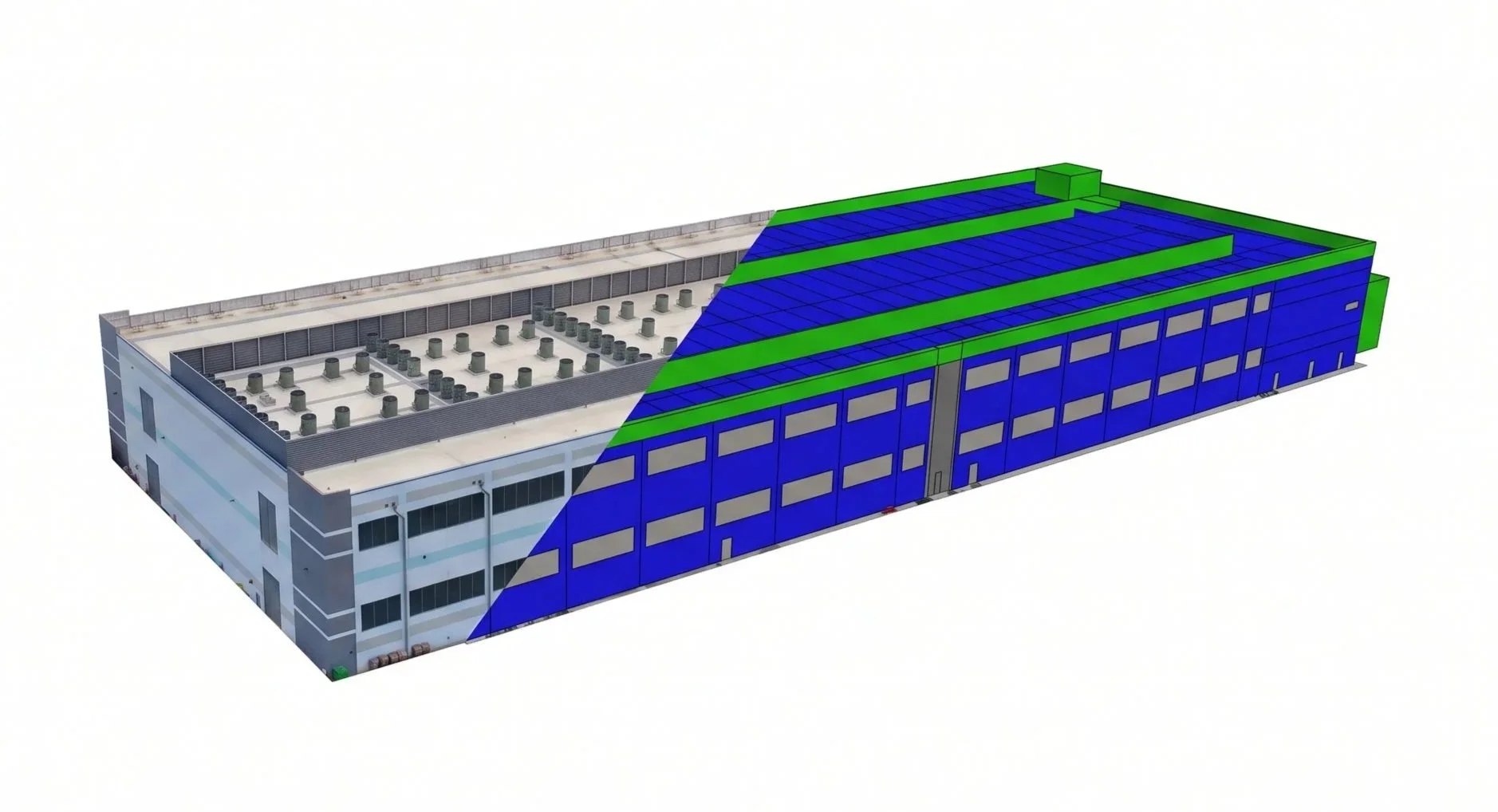
As hyperscale data centers grow in number, the importance of building them to adhere to and go beyond energy code requirements becomes more imperative. But they are unique, complicated environments and understanding current International Energy Conservation Code (IECC) regulations can be challenging.
Those of us who spend a lot of time interpreting energy codes and supporting design teams like to see it this way: hyperscale data centers are classified as commercial buildings with mission critical systems layered inside them that make code compliance more nuanced. That framing helps us unpack regulations and exemptions, and more importantly, advise designers and owners on where to focus their attention as projects move from concept to compliance. It always helps to start with what the IECC actually regulates:
What the IECC Regulates
The code regulates the core elements of a hyperscale data center, generally speaking, in a similar way that it would for pretty much any commercial building. The presence of servers doesn’t erase envelope requirements, air‑barrier continuity, lighting controls, or monitoring obligations. Plus, the building still has to be monitored and documented in ways that demonstrate compliance.
At its core, the IECC is concerned with how the building behaves as an energy system. That begins with the thermal envelope, which includes everything from the data halls to the administrative areas, electrical rooms, and mechanical spaces. The envelope must meet insulation requirements, maintain air‑barrier continuity, and limit thermal bridging, all of which directly influence how much energy the building uses to maintain stable conditions.
The code also regulates the HVAC systems and controls that serve the building. Economizers, ventilation strategies, fan power, and control sequences must meet IECC requirements, because they affect how efficiently the building maintains its baseline environment. Interior and exterior lighting power and controls must ensure that the building’s lighting systems operate efficiently and respond appropriately to occupancy and daylight conditions.
The IECC also requires energy monitoring and submetering, reflecting a broader shift toward transparency and operational accountability. For a building with large and complex energy flows like a data center, visibility into how energy is used is no longer optional — it’s a baseline expectation.
Data centers also have to show that the building itself is contributing to overall efficiency and supporting grid‑responsive behavior. Even though their cooling and electrical systems are more complex, the IECC still expects the building to earn credits that reflect thoughtful energy use and long‑term performance.
How Data Centers are Unusual
Hyperscale facilities behave in ways that push the boundaries of what current IECC standards were originally designed to regulate. Their internal loads are so large that they operate under conditions fundamentally different from other commercial building types such as offices, schools, or warehouses. These differences create design challenges that aren’t immediately obvious when you first read the code. Here’s a breakdown of the things that must be considered when designing hyperscale data centers to meet or exceed energy codes:
The IT load dominates. The cooling energy required to manage server heat far exceeds the energy needed to condition the building itself. But the code doesn’t classify that cooling as “process energy” in a way that exempts the space. The data hall is still conditioned space, and therefore, regulated space.
The low‑energy exemption almost never applies. The IECC includes an exemption for spaces with extremely low heating and cooling energy. Data halls don’t qualify. Even with aggressive economization or water‑side cooling, maintaining ASHRAE TC 9.9 temperature and humidity ranges requires meaningful conditioning energy. The exemption is designed for lightly conditioned industrial spaces, not mission critical environments.
Minimal fenestration helps, but only to a point. Most hyperscale facilities have very few windows, which simplifies prescriptive envelope compliance. But the envelope still must meet insulation, air‑barrier, and thermal‑bridge requirements. “Few windows” doesn’t mean “no envelope obligations.”
Tilt‑up and precast walls introduce thermal‑bridge and air‑barrier complexity. Large wall panels, long spans, heavy roof equipment, and extensive penetrations create real challenges for air‑barrier continuity and thermal‑bridge mitigation. These aren’t theoretical issues. They show up in blower‑door testing, commissioning, and operational energy performance.
Building for Efficiency, Resilience, and Lower Carbon
Designing hyperscale data centers with a clear understanding of the energy code isn’t just about passing inspections. It’s about building facilities that use less energy, emit less carbon, and operate more reliably over time. These buildings may be energy‑intensive, but they don’t have to be inefficient. Understanding both the intent and the nuance of the IECC can help project teams turn compliance into a meaningful sustainability advantage.
Want to dive deeper into this information? Reach out to schedule a complimentary CEU session on this topic for your team!
